
Granville Central Middle School Teacher Brings Holocaust History to Life Following International Study Tour
Granville Central Middle School Teacher Brings Holocaust History to Life Following International Study Tour
Lynn Cooper, an eighth-grade social studies teacher at Granville Central Middle School, recently completed a 12-day international Holocaust education experience in Lithuania, Poland, and the Netherlands.
Cooper was selected from educators across the United States as one of 25 participants in the 2026 European Summer Institute for Holocaust Educators: The Power of Place. The program was organized by the Jewish Community Relations Council of Minnesota and the Dakotas and the Humanus Network, a Holocaust and human rights education consulting organization.
This year’s educational institute was centered on Salvaged Pages: Young Writers’ Diaries of the Holocaust by acclaimed author Alexandra Zapruder. Traveling alongside Zapruder, the educators traced the footsteps of several young diarists, visiting the places where they lived and examining what they experienced during the Holocaust. Participants completed assigned readings before the trip and documented their own learning through daily journal entries.
During the journey, Cooper visited historically significant locations in Lithuania, Poland, and the Netherlands. Highlights included former Jewish ghettos and communities, the Ponar killing fields, Auschwitz-Birkenau, Camp Vught, and the Anne Frank House. The group also visited museums, cemeteries, memorials, and deportation sites connected to the young diarists they had studied.
For Cooper, physically standing in these places transformed history from a collection of facts into a deeply personal and emotional experience.
“The trip was amazing,” Cooper said. “I experienced something that I can now share with my students. I now have actual information about how it smelled, how it felt, and what it was like to stand in these places. It adds more passion and grounds the knowledge in the experience. Actually being there changed everything.”
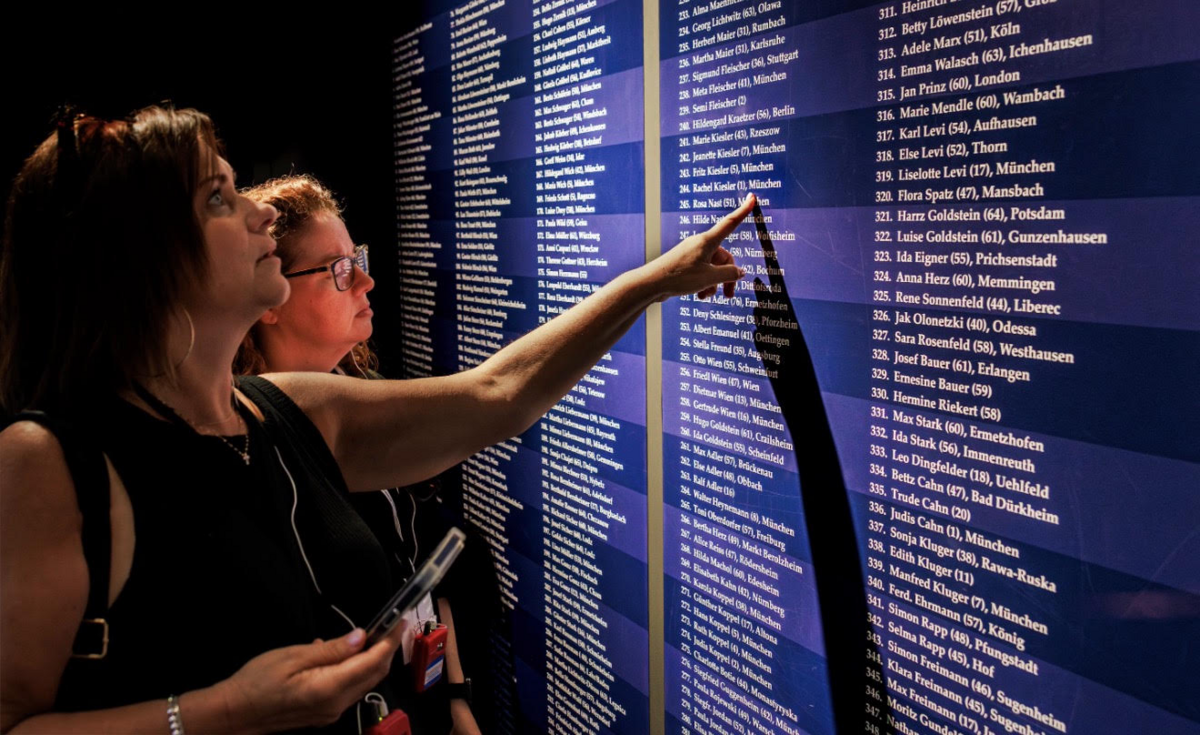
Mrs. Cooper points to the names of an entire family including a one-year-old child who were murdered in the killing fields at the Ninth Fort in Kaunas, Lithuania.
Cooper said the journey gave her a much deeper understanding of the layers and complexity of Holocaust history, including the spread of antisemitism, the use of propaganda and misinformation, and the systematic persecution of Jewish people and other victims.
Visits to Ponar and Auschwitz-Birkenau were especially powerful. Cooper described being at Auschwitz-Birkenau as overwhelming and deeply emotional, particularly while walking through the camp grounds and seeing the remains of the gas chambers and crematoria.
Her reflections also focused on the importance of listening to the stories that remain embedded in the places where people lived, suffered, and died. In one journal entry, Cooper wrote:
“History doesn’t live only in museums, books, or monuments. It lives through the whispers beneath the sidewalks of Lodz, the rustling of the trees, among the forgotten graves and along the railroad tracks where families took their last journey together. The whispers are still there. The question is whether we are willing to slow down long enough to hear it.”
Cooper returned with dozens of video recordings and hundreds of photographs that she plans to incorporate into her social studies lessons. She said the materials will help her students connect broad historical events with the individual lives and experiences of the people who endured them.
“My students will gain a deeper understanding of this period because I can now bring firsthand knowledge and personal reflections from these historic sites into the classroom, helping them see the Holocaust as more than something they simply read about in a textbook,” Cooper said.
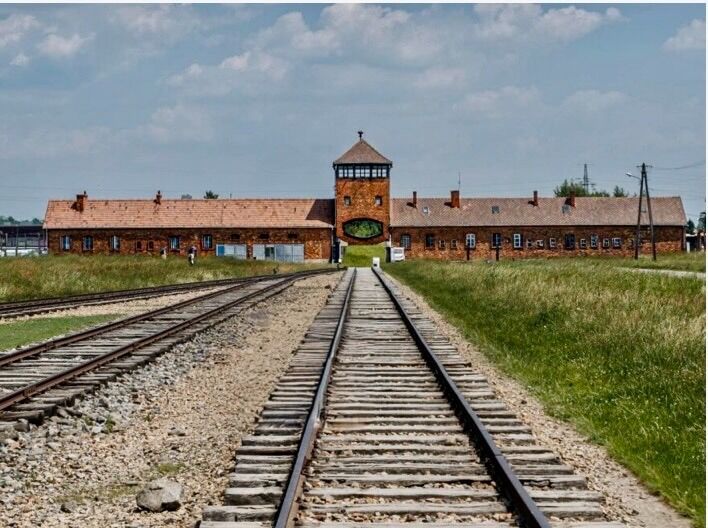
Mrs. Cooper took this photograph of the railroad tracks leading into Auschwitz-Birkenau while visiting Poland. Standing in this historic place was a deeply moving and unforgettable experience.
She also plans to share what she learned through professional development opportunities for other teachers. Her goal is to help educators present Holocaust history with greater depth, accuracy, and humanity while encouraging students to recognize the dangers of prejudice, hatred, and misinformation.
“This experience has given Mrs. Cooper a powerful perspective that will benefit both her students and her colleagues,” said Superintendent Dr. Stan Winborne. “Her willingness to share what she learned will help bring history to life in a meaningful and lasting way. I admire her commitment to her students and her leadership as a teacher.”